 Waxahachie Flooring Co.
Floor Repair & Replacement in Waxahachie, TX
Water damage, cracked tile, and squeaky spots fixed fast, with an honest answer on repair versus replacement.
Waxahachie Flooring Co. is the floor repair Waxahachie TX homeowners call for hardwood, laminate, vinyl plank, tile, and carpet. Not every damaged floor needs to be torn out and replaced, and we'd rather give you an honest repair option that saves you money than sell you a bigger job than you actually need. Our crew diagnoses what's actually causing the damage first, since a repair that doesn't address the underlying cause tends to fail again within a year or two.
What Floor Repair Involves
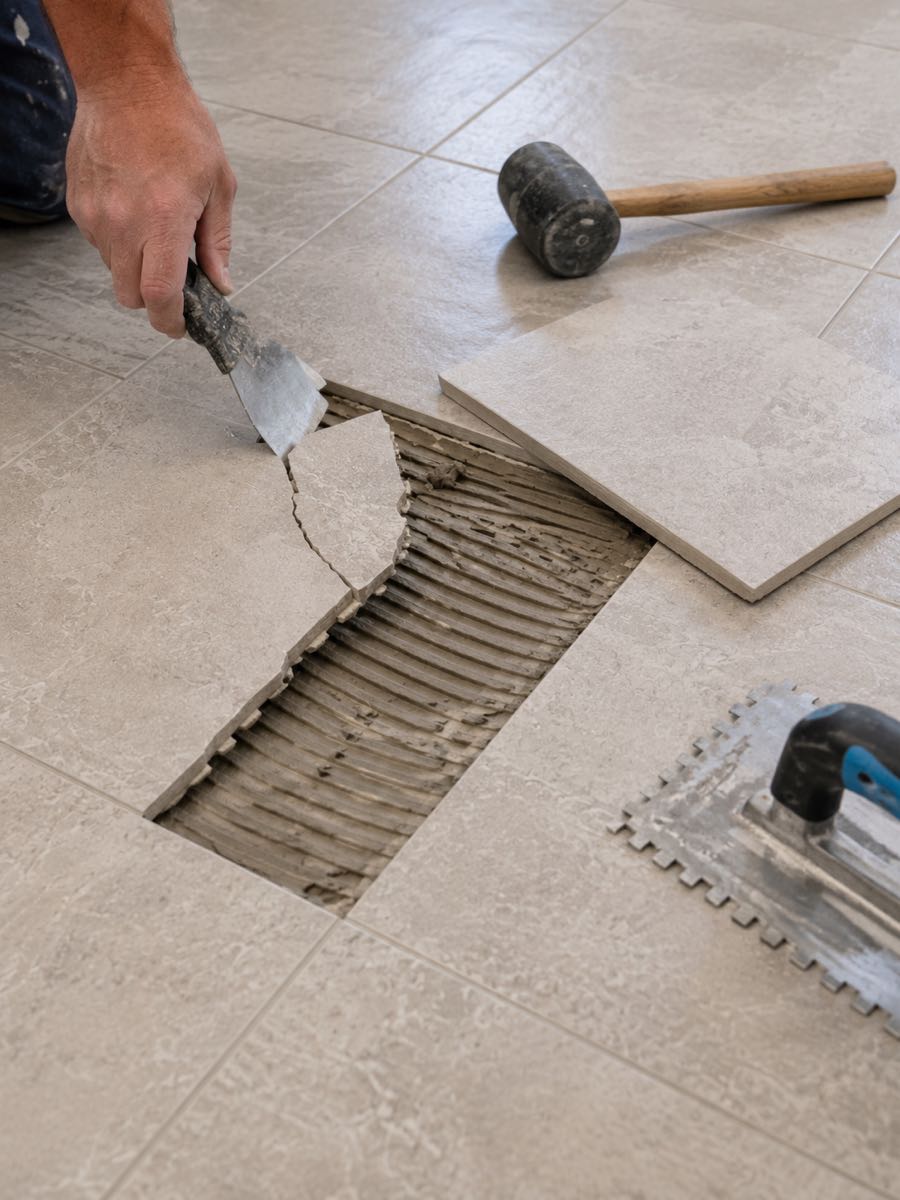
Repair work varies a lot by material. On hardwood, that means sanding out scratches, replacing individual damaged boards, or refinishing a section that's water-stained. On tile, it means removing and resetting cracked pieces, often with a crack-isolation membrane added underneath so the same spot doesn't fail again. On laminate and vinyl plank, click-lock designs often let us swap individual damaged planks without redoing the whole room. Carpet repair usually means re-stretching a section that's rippled, patching a burn or tear, or addressing pad issues underneath. In every case, we start by figuring out what caused the damage, not just patching the surface.
When You Need Floor Repair
Call us for water damage from a leak or appliance failure, cracked or lifting tile, squeaky or soft spots in a hardwood or laminate floor, carpet that's rippled or come loose from the tack strip, or any flooring that's been damaged during a move or renovation elsewhere in the house. The sooner water damage gets addressed, the less likely it is to spread to subfloor or framing, so we treat those calls as priority scheduling.
Why Flooring Damage Happens in Waxahachie
Two causes show up more than anything else in our repair calls: water and slab movement. Water damage comes from leaking appliances, plumbing failures, and occasionally storm intrusion, and it affects hardwood, laminate, and carpet pad the fastest since those materials absorb moisture. Slab movement is the more Waxahachie-specific cause: Ellis County's black gault clay soil expands and contracts with rainfall and drought cycles throughout the year, and that flexing is responsible for a large share of the cracked tile, gapped hardwood, and buckled laminate we get called out to fix. A repair that doesn't account for that ongoing movement often just delays the next repair instead of preventing it.
What Affects Floor Repair Cost
Cost depends heavily on which material is damaged, how much area is affected, and what caused it. A handful of cracked tiles with matching replacement material on hand is a relatively small job. A repair that requires removing baseboards, replacing subfloor, or matching discontinued material takes longer and costs more. Water damage repairs also depend on how long the moisture sat before it was caught, since subfloor drying or replacement adds time and cost that surface-level damage doesn't. We give you a clear estimate before starting any work.
Repair vs. Replacement: How We Decide
We default to repair whenever it will genuinely last, since it's almost always the more affordable option and there's no reason to replace a floor that doesn't need it. Repair makes sense when damage is localized, the material isn't discontinued, and the underlying cause, whether that's a fixed leak or a properly isolated slab movement issue, has been addressed. We recommend full replacement when damage is spread across a large area, when repeated repairs haven't held in the same spot, when water has reached subfloor or framing, or when a floor has already been repaired as many times as it reasonably can be. We'll always explain which situation your floor is in and why, not just default to whichever option costs more.
Floor Repair FAQs
Can water-damaged flooring always be repaired instead of replaced?
Not always. It depends on how long the water sat and which material is affected. Vinyl plank often survives water exposure fine, while laminate and hardwood that have swollen usually need the affected boards replaced rather than dried out and reused.
Why does my tile keep cracking in the same spot?
Repeated cracking in one area is almost always a sign of ongoing slab movement rather than a tile defect. Adding a crack-isolation membrane when the tile is repaired addresses the actual cause instead of just replacing the tile again.
How fast can you respond to a flooring emergency?
We prioritize active water damage calls and can typically schedule an assessment within a day or two. The faster water damage is addressed, the less likely it is to spread to subfloor or framing underneath.
Is it cheaper to repair or replace flooring?
Repair is almost always cheaper upfront when it's a genuine long-term fix. It becomes a false economy when the same spot keeps failing, which is why we focus on fixing the underlying cause rather than just the visible damage.
Do you match existing flooring for a partial repair?
We do our best to match existing material for partial repairs. Some products get discontinued over time, in which case we'll tell you upfront and discuss whether a small color variation is acceptable or a full-room replacement makes more sense.
Ready to fix a flooring problem? Fill out the form or call (857) 371-3693 for a free, no-pressure assessment.
Have a Flooring Problem?
Call now for a free assessment and a straight answer on repair versus replacement.
Call (857) 371-3693